#include <GiShellToolkit.h>
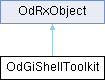
Classes | |
| struct | OdGiShellEdgeDescription |
| struct | OdGiShellEdgeVisibilityDescription |
| struct | OdGiShellEdgeVisibilityOptions |
| struct | OdGiShellFaceDescription |
| class | OdGiShellFaceOrientationCallback |
| struct | OdGiShellOriginalFaceDescription |
Public Types | |
| enum | ShellToolkitOption { kUnifyVertices = 1 , kTriangulateHoles = 1 << 1 , kForceTriangulation = 1 << 2 , kKeepInitialData = 1 << 3 } |
| typedef OdGeVector3d(* | OdGiCalculateNormalCallback) (OdGiShellToolkit *pToolkit, OdUInt32 nVertexIndex) |
Public Member Functions | |
| ODRX_DECLARE_MEMBERS (OdGiShellToolkit) | |
| virtual bool | addShell (OdUInt32 nPoints, const OdGePoint3d *pPoints, OdUInt32 nFaces, const OdInt32 *pFaces, OdUInt8 options=OdGiShellToolkit::kTriangulateHoles)=0 |
| virtual void | clear ()=0 |
| virtual bool | hasDupilcateVertices () const =0 |
| virtual OdUInt32 | numSharpEdges (bool bOnlyCount=true) const =0 |
| virtual OdUInt32 | numSingularEdges (bool bOnlyCount=true) const =0 |
| virtual OdUInt32 | numDegeneratedFaces () const =0 |
| virtual bool | hasDuplicateFaces (OdUInt32 *pFirstDuplicateFace=NULL, bool bRollFaces=false) const =0 |
| virtual bool | checkFacesOrientation () const =0 |
| virtual bool | checkFacesOrientation (const OdGiShellFaceOrientationCallback *pCallback) const =0 |
| virtual void | unifyVertices ()=0 |
| virtual void | removeDegenerateFaces ()=0 |
| virtual void | removeDuplicateFaces (bool bRollFaces=false)=0 |
| virtual bool | fixFaceOrientation (bool bRestoreModel=true)=0 |
| virtual bool | fixFaceOrientation (const OdGiShellFaceOrientationCallback *pCallback, bool bRestoreModel=true)=0 |
| virtual OdGeTol & | tolerance ()=0 |
| virtual const OdGeTol & | tolerance () const =0 |
| virtual OdUInt32 | numVertices () const =0 |
| virtual const OdGePoint3d * | vertices () const =0 |
| virtual OdUInt32 | faceListSize () const =0 |
| virtual const OdInt32 * | faceList () const =0 |
| virtual void | getSharpEdges (OdArray< OdGiShellEdgeDescription > &edges, bool bOnlyCount=true, bool bIgnoreZeroHoldes=false) const =0 |
| virtual void | getSingularEdges (OdArray< OdGiShellToolkit::OdGiShellEdgeDescription > &edges, bool bOnlyCount=true) const =0 |
| virtual void | getIncorrectOrientedFaces (OdArray< OdGiShellFaceDescription > &faces, bool bAddNotOriented=true) const =0 |
| virtual void | getIncorrectOrientedFaces (const OdGiShellFaceOrientationCallback *pCallback, OdArray< OdGiShellFaceDescription > &faces, bool bAddNotOriented=true) const =0 |
| virtual bool | getOriginalFaceDescription (OdUInt32 nFaceOffset, OdGiShellOriginalFaceDescription &result) const =0 |
| virtual void | filterEdgesByCreaseAngle (OdArray< OdGiShellToolkit::OdGiShellEdgeDescription > &edges, double dAngle) const =0 |
| virtual OdUInt32 | numNonTriangleFaces () const =0 |
| virtual void | triangulate ()=0 |
| virtual bool | calculateFaceNormals (OdArray< OdGeVector3d > &normals) const =0 |
| virtual bool | calculateAverageVertexNormals (OdArray< OdGeVector3d > &normals) const =0 |
| virtual bool | calculateAverageVertexNormals (OdArray< OdGeVector3d > &normals, double creaseAngelLimit, OdGiCalculateNormalCallback pCallback=NULL) const =0 |
| virtual bool | calculateEdgeVisibilitiesByCreaseAngle (OdArray< bool > &visibilities, double creaseAngle) const =0 |
| virtual bool | calculateEdgeVisibilitiesByCreaseAngle (OdArray< OdGiShellEdgeVisibilityDescription > &visibilities, double creaseAngle, const OdGiShellEdgeVisibilityOptions &options=OdGiShellEdgeVisibilityOptions()) const =0 |
 Public Member Functions inherited from OdRxObject Public Member Functions inherited from OdRxObject | |
| ODRX_HEAP_OPERATORS () | |
| OdRxObject () | |
| virtual | ~OdRxObject () |
| virtual OdRxObject * | queryX (const OdRxClass *pClass) const |
| virtual OdRxObject * | x (const OdRxClass *pClass) const |
| virtual OdRxClass * | isA () const |
| virtual void | addRef ()=0 |
| virtual void | release ()=0 |
| virtual long | numRefs () const |
| bool | isKindOf (const OdRxClass *pClass) const |
| virtual OdRxObjectPtr | clone () const |
| virtual void | copyFrom (const OdRxObject *pSource) |
| virtual OdRx::Ordering | comparedTo (const OdRxObject *pOther) const |
| virtual bool | isEqualTo (const OdRxObject *pOther) const |
Static Public Member Functions | |
| static OdSmartPtr< OdGiShellToolkit > | create () |
| Static Public Member Functions inherited from OdRxObject | |
| static OdRxObjectPtr | cast (const OdRxObject *pointer) |
| static OdRxClass * | desc () |
| static void | rxInit () |
| static void | rxUninit () |
Detailed Description
A class that provides an interface for operations with a shell. <group OdGi_Classes>
- See also
- <link tv_geometry_shells, Work with Shells> <link tv_shell_boundary_detection, Shell Boundary Detection>
Definition at line 37 of file GiShellToolkit.h.
Member Typedef Documentation
◆ OdGiCalculateNormalCallback
| typedef OdGeVector3d(* OdGiShellToolkit::OdGiCalculateNormalCallback) (OdGiShellToolkit *pToolkit, OdUInt32 nVertexIndex) |
A data type that represents a pointer to a callback function for vertex normal calculation within custom applications.
- Parameters
-
pToolkit [in] A pointer to the current <link OdGiShellToolkit, shell toolkit> instance. nVertexIndex [in] An index of the vertex that is being processed.
- Returns
- An <exref target="https://docs.opendesign.com/tkernel/OdGeVector3d.html">OdGeVector3d</exref> object that represents the vertex normal.
- Remarks
- The implementation of the callback function must provide a normalized non-zero result.
Definition at line 453 of file GiShellToolkit.h.
Member Enumeration Documentation
◆ ShellToolkitOption
Contains declarations that represent options for shell management.
Definition at line 44 of file GiShellToolkit.h.
Member Function Documentation
◆ addShell()
|
pure virtual |
Adds a shell to the <link OdGiShellToolkit, shell toolkit> object.
- Parameters
-
nPoints [in] The number of vertices. pPoints [in] An array of vertices that is represented with a pointer to its first element. nFaces [in] The size of the face list. pFaces [in] A face list. Each face is described with the number of vertices and indices from the vertex array (its size is equal to the number of vertices + 1). options [in] A byte value that contains <link OdGiShellToolkit::ShellToolkitOption, shell toolkit options>.
- Returns
- The true value if shell data is successfully added to the toolkit model; otherwise, it returns false.
- Remarks
- If the <link OdGiShellToolkit::ShellToolkitOption::kUnifyVertices, kUnifyVertices> option is enabled, only vertices from the specified shell are unified; vertices from previously added shell data are not modified. The <link OdGiShellToolkit::ShellToolkitOption::kForceTriangulation, kForceTriangulation> option includes the <link OdGiShellToolkit::ShellToolkitOption::kTriangulateHoles, kTriangulateHoles> option, so if it is enabled, the <link OdGiShellToolkit::ShellToolkitOption::kTriangulateHoles, kTriangulateHoles> option is not required. If the <link OdGiShellToolkit::ShellToolkitOption::kTriangulateHoles, kTriangulateHoles> and <link OdGiShellToolkit::ShellToolkitOption::kForceTriangulation, kForceTriangulation> options are disabled, holes are not supported. The <link OdGiShellToolkit::ShellToolkitOption::kKeepInitialData, kKeepInitialData> option guarantees that the number of faces and vertices are not modified. This option disables other options and limits toolkit functionality. Also, this option is specified only when processing a single shell.
◆ calculateAverageVertexNormals() [1/2]
|
pure virtual |
Calculates vertex average normals for the shell.
- Parameters
-
normals [out] An array that stores the calculation results (normals are represented with <exref target="https://docs.opendesign.com/tkernel/OdGeVector3d.html">OdGeVector3d</exref> objects).
- Returns
- A Boolean value that is equal to true if all calculated normals are non-zero; otherwise, the method returns false.
- Remarks
- A normal index matches the vertex index in the vertex list. A normal being calculated as normalized is the sum of all face normals that contain vertices. A normal can be zero if a vertex is isolated or faces are not oriented in the same direction.
◆ calculateAverageVertexNormals() [2/2]
|
pure virtual |
Calculates vertex average normals for the shell.
- Parameters
-
normals [out] An array that stores the calculation results (normals are represented with <exref target="https://docs.opendesign.com/tkernel/OdGeVector3d.html">OdGeVector3d</exref> objects). creaseAngelLimit [in] A crease angle limit. pCallback [in] A pointer to the callback function for the custom normal calculation (NULL by default).
- Returns
- A Boolean value that is equal to true if all calculated normals are non-zero; otherwise, the method returns false.
- Remarks
- A normal index matches the vertex index in the vertex list. A normal being calculated as normalized is the sum of all face normals that contain a vertex only if all angles between the face normals are less than the specified limit value. Otherwise, the callback function is called to calculate the normal. If the callback function is not specified, a zero normal for the vertex is returned. A normal can be zero when the vertex is isolated or faces are not oriented in the same direction. It can also be zero when the angle between the face normals is greater than the specified limit value and the callback function is not specified.
◆ calculateEdgeVisibilitiesByCreaseAngle() [1/2]
|
pure virtual |
Calculates the visibility of the shell edges according to the crease angle.
- Parameters
-
visibilities [out] An array of Boolean values that contain edge visibility flag values. The method fills it with visibility flag values and returns it to the calling subroutine. creaseAngle [in] A crease angle limit.
- Returns
- The true value if the visibility flag values for edges are successfully calculated; otherwise, the method returns false.
- Remarks
- Sharp and singular edges are visible. Edges with an angle between connected face normals that is greater than the crease angle are visible too. For a single shell, the method generates a ready-to-use array of visibility flag values.
◆ calculateEdgeVisibilitiesByCreaseAngle() [2/2]
|
pure virtual |
Calculates the visibility of the shell edges according to the crease angle.
- Parameters
-
visibilities [out] An array of Boolean values that contain edge visibility flag values. The method fills it with visibility flag values and returns it to the calling subroutine. creaseAngle [in] A crease angle limit. options [in] <link OdGiShellToolkit::OdGiShellEdgeVisibilityOptions, Visibility generation options>.
- Returns
- The true value if the visibility flag values for edges are successfully calculated; otherwise, the method returns false.
- Remarks
- Sharp and singular edges are visible. Edges with an angle between connected face normals that is greater than the crease angle are visible too. For multi-shell cases, the method generates data that contains connections with the original input. When two faces have a common visible edge, its visibility is represented in the output array with a single value if the <link OdGiShellToolkit::OdGiShellEdgeVisibilityOptions::bDuplicateEdges, bDuplicateEdges option> is equal to false; otherwise, the visibility is represented with two values (for AB and BA edges).
◆ calculateFaceNormals()
|
pure virtual |
Calculates face normals for the shell.
- Parameters
-
normals [out] An array that stores face normals (represented with <exref target="https://docs.opendesign.com/tkernel/OdGeVector3d.html">OdGeVector3d</exref> objects).
- Returns
- A Boolean value that is equal to true if all calculated normals are non-zero; otherwise, the method returns false.
- Remarks
- This method calculates face normals according to the face plane and the face orientation. A normal index matches the face in the face list. A normal can be zero when the face is degenerated or not flat.
◆ checkFacesOrientation() [1/2]
|
pure virtual |
Checks the face orientations of a shell.
- Returns
- The true value when all faces are correctly oriented.
- Remarks
- The method is not relevant if the shell contains sharp or singular edges.
◆ checkFacesOrientation() [2/2]
|
pure virtual |
Checks the face orientations of a shell using a face orientation callback.
- Parameters
-
pCallback [in] A pointer to an <link OdGiShellToolkit::OdGiShellFaceOrientationCallback, OdGiShellFaceOrientationCallback> object.
- Returns
- The true value when all faces are correctly oriented.
- Remarks
- The method is relevant when the shell contains sharp or singular edges, and it can be used instead of the <link OdGiShellToolkit::checkFacesOrientation@const, checkFacesOrientation()> method.
◆ clear()
|
pure virtual |
Clears the <link OdGiShellToolkit, shell toolkit> object.
◆ create()
|
static |
Creates an instance of a <link OdGiShellToolkit, shell toolkit> implementation.
- Returns
- A smart pointer to the toolkit implementation.
◆ faceList()
|
pure virtual |
Requests the face list from the <link OdGiShellToolkit, shell toolkit> object. The face list contains the number of vertices in the first element and indices of vertices that belong to the face in other elements. Vertex indices refer to the elements of the shell vertex array.
- Returns
- A pointer to the first element of the face list.
◆ faceListSize()
|
pure virtual |
Requests the size of the face list from the <link OdGiShellToolkit, shell toolkit> object.
- Returns
- An unsigned 32-bit integer value that contains the face list size.
◆ filterEdgesByCreaseAngle()
|
pure virtual |
Generates a list of edges with a crease angle that exceeds the threshold value.
- Parameters
-
edges [out] An array of <link OdGiShellToolkit::OdGiShellEdgeDescription, OdGiShellEdgeDescription> objects. The method fills this array with information about edges and returns it to the calling subroutine. dAngle [in] The threshold value of the crease angle.
- Remarks
- The method returns pairs of <link OdGiShellToolkit::OdGiShellEdgeDescription, OdGiShellEdgeDescription> objects; each pair describes the same edge but on different faces.
◆ fixFaceOrientation() [1/2]
|
pure virtual |
Orients shell faces correctly.
- Parameters
-
bRestoreModel [in] A flag that specifies whether the toolkit should restore the internal shell model.
- Returns
- The true value when orientation correction is successful; otherwise, it returns false.
- Remarks
- The method is not relevant if the shell contains sharp or singular edges. After face reorientation, the internal shell model becomes invalid. However, usually face reorientation is the last operation, so restoring the model may not be necessary. Further <link OdGiShellToolkit, toolkit> object usage after the <link OdGiShellToolkit::fixFaceOrientation@bool, fixFaceOrientation>(false) call without calling the <link OdGiShellToolkit::clear, clear()> method generates incorrect results.
◆ fixFaceOrientation() [2/2]
|
pure virtual |
Orients shell faces correctly using a face orientation callback.
- Parameters
-
pCallback [in] A pointer to the <link OdGiShellToolkit::OdGiShellFaceOrientationCallback, OdGiShellFaceOrientationCallback> object. bRestoreModel [in] A flag that specifies whether the toolkit should restore the internal shell model.
- Returns
- The true value when orientation correction is successful; otherwise, it returns false.
- Remarks
- The method is relevant if the shell contains sharp or singular edges, and it can be used instead of the <link OdGiShellToolkit::fixFaceOrientation@bool, fixFaceOrientation()> method. After face reorientation, the internal shell model becomes invalid. However, usually face reorientation is the last operation, so restoring the model may not be necessary. Further <link OdGiShellToolkit, toolkit> object usage after the <link OdGiShellToolkit::fixFaceOrientation@bool, fixFaceOrientation>(false) call without calling the <link OdGiShellToolkit::clear, clear()> method generates incorrect results.
◆ getIncorrectOrientedFaces() [1/2]
|
pure virtual |
Provides access to incorrectly oriented faces.
- Parameters
-
pCallback [in] A pointer to an <link OdGiShellToolkit::OdGiShellFaceOrientationCallback, OdGiShellFaceOrientationCallback> object. faces [out] An array of <link OdGiShellToolkit::OdGiShellFaceDescription, OdGiShellFaceDescription> objects. The method fills this array with information about incorrectly oriented faces and returns it to the calling subroutine. bAddNotOriented [in] A flag value that specifies whether the toolkit also includes non-oriented faces in the resulting array.
◆ getIncorrectOrientedFaces() [2/2]
|
pure virtual |
Retrieves incorrectly oriented faces.
- Parameters
-
faces [out] An array of <link OdGiShellToolkit::OdGiShellFaceDescription, OdGiShellFaceDescription> objects. The method fills this array with information about incorrectly oriented faces and returns it to the calling subroutine. bAddNotOriented [in] A flag value that specifies whether the toolkit also includes non-oriented faces in the resulting array.
◆ getOriginalFaceDescription()
|
pure virtual |
Provides access to the original face description.
- Parameters
-
nFaceOffset [in] An offset of the face in the face list (that is returned by the <link OdGiShellToolkit::faceList@const, faceList(), faceList()> method). result [out] A reference to an <link OdGiShellToolkit::OdGiShellOriginalFaceDescription, OdGiShellOriginalFaceDescription> object that contains the face description. The method fills this object with information about the face and returns it to the calling subroutine.
- Returns
- A Boolean value that is equal to true if the original face description is found; otherwise, the method returns false.
◆ getSharpEdges()
|
pure virtual |
Retrieves the sharp edges of the shell.
- Parameters
-
edges [out] An array of <link OdGiShellToolkit::OdGiShellEdgeDescription, OdGiShellEdgeDescription> objects. The method fills this array with information about sharp edges and returns it to the calling subroutine. bOnlyCount [in] A flag value that specifies whether the toolkit checks only the number of connected faces or considers face orientation as well. bIgnoreZeroHoldes [in] A flag value that indicates whether flat holes are included in the result array.
- Remarks
- A flat hole is a closed contour that consists of sharp edges that are parallel to each other.
◆ getSingularEdges()
|
pure virtual |
Retrieves the singular edges of the shell.
- Parameters
-
edges [out] An array of <link OdGiShellToolkit::OdGiShellEdgeDescription, OdGiShellEdgeDescription> objects. The method fills this array with information about singular edges and returns it to the calling subroutine. bOnlyCount [in] A flag value that specifies whether the toolkit checks only the number of connected faces or considers face orientation as well.
◆ hasDupilcateVertices()
|
pure virtual |
Checks whether a shell contains duplicate vertices.
- Returns
- The true value if the shell contains at least one pair of vertices with the same coordinates; otherwise, it returns false.
◆ hasDuplicateFaces()
|
pure virtual |
Checks whether a shell contains duplicate faces.
- Parameters
-
pFirstDuplicateFace [out] A pointer to the first duplicate face. bRollFaces [in] A flag that specifies whether the toolkit should roll faces to check for duplicates.
- Returns
- The true value when the shell contains duplicate faces; otherwise, it returns false.
- Remarks
- Faces like "1-2-3" and "2-3-1" are not equal without rolling.
◆ numDegeneratedFaces()
|
pure virtual |
Checks whether a shell contains degenerate faces.
- Returns
- An unsigned 32-bit integer value that contains the number of degenerate faces.
◆ numNonTriangleFaces()
|
pure virtual |
Requests the number of non-degenerated, non-triangulated faces.
- Returns
- An unsigned 32-bit integer value that contains the number of faces with more than three points.
◆ numSharpEdges()
Checks whether a shell contains sharp edges.
- Parameters
-
bOnlyCount [in] A flag that specifies whether the toolkit checks only the number of connected faces (when it is equal to true) or considers the face orientation as well (when it is equal to false).
- Returns
- An unsigned 32-bit integer value that contains the number of sharp edges.
◆ numSingularEdges()
Checks whether a shell contains singular edges.
- Parameters
-
bOnlyCount [in] A flag that specifies whether the toolkit checks only the number of connected faces (when it is equal to true) or considers the face orientation as well (when it is equal to false).
- Returns
- An unsigned 32-bit integer value that contains the number of singular edges.
◆ numVertices()
|
pure virtual |
Requests the number of vertices from the <link OdGiShellToolkit, shell toolkit> object.
- Returns
- An unsigned 32-bit integer that contains the number of vertices.
◆ ODRX_DECLARE_MEMBERS()
| OdGiShellToolkit::ODRX_DECLARE_MEMBERS | ( | OdGiShellToolkit | ) |
◆ removeDegenerateFaces()
|
pure virtual |
Removes degenerate faces.
◆ removeDuplicateFaces()
Removes duplicate faces.
- Parameters
-
bRollFaces [in] A flag that specifies whether the toolkit should roll faces to check for duplicates.
- Remarks
- Faces like "1-2-3" and "2-3-1" are not equal without rolling.
◆ tolerance() [1/2]
|
pure virtual |
Retrieves the tolerance access for the <link OdGiShellToolkit, shell toolkit> object.
- Returns
- An <exref target="https://docs.opendesign.com/tkernel/OdGeTol.html">OdGeTol</exref> object that contains the <link OdGiShellToolkit, shell toolkit> tolerance.
◆ tolerance() [2/2]
|
pure virtual |
Retrieves the tolerance for the <link OdGiShellToolkit, shell toolkit> object.
- Returns
- An <exref target="https://docs.opendesign.com/tkernel/OdGeTol.html">OdGeTol</exref> object that contains the <link OdGiShellToolkit, shell toolkit> tolerance.
- Remarks
- The <exref target="https://docs.opendesign.com/tkernel/OdGeTol.html">OdGeTol</exref> object is returned via reference; therefore, the tolerance value can be modified outside the <link OdGiShellToolkit, shell toolkit> object.
◆ triangulate()
|
pure virtual |
Triangulates non-degenerated, non-triangulated faces.
◆ unifyVertices()
|
pure virtual |
Unifies shell vertices.
◆ vertices()
|
pure virtual |
Requests the array of shell vertices from the <link OdGiShellToolkit, shell toolkit> object.
- Returns
- A pointer to the first <exref target="https://docs.opendesign.com/tkernel/OdGePoint3d.html">element</exref> of the vertex array.
The documentation for this class was generated from the following file:
Generated on Tue Apr 15 2025 11:30:31