#include <IfcPropertySetTemplateAutoImpl.h>
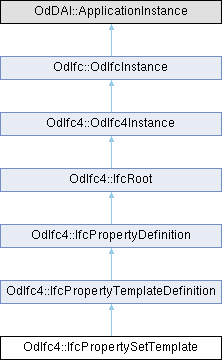
IfcPropertySetTemplate defines the template for all dynamically extensible property sets represented by IfcPropertySet. The property set template is a container of property templates within a property tree. The individual property templates are interpreted according to their Name attribute and will have no values assigned. Property set templates can form part of a property library used and declared within a project. Depending on the TemplateType the IfcPropertySetTemplate defines a template for: "Pset_" - occurrences of IfcPropertySet "QTO_" - occurrences of IfcElementQuantity
Definition at line 50 of file Ifc4/IfcPropertySetTemplateAutoImpl.h.
◆ IfcPropertySetTemplate()
| OdIfc4::IfcPropertySetTemplate::IfcPropertySetTemplate |
( |
| ) |
|
◆ comparedToEarlyImpl()
| virtual bool OdIfc4::IfcPropertySetTemplate::comparedToEarlyImpl |
( |
const OdDAI::ApplicationInstance * | pOther, |
|
|
OdRx::Ordering & | ordering ) const |
|
overridevirtual |
Early-bound version of instances comparison.
- Parameters
-
| pOther | [in] Other application instance. |
| ordering | [out] Receives the ordering (comparison) status. |
- Returns
- true if comparison was performed, false if method has no implementation, so late-bound version could be applied.
Reimplemented from OdIfc4::IfcPropertyTemplateDefinition.
◆ getApplicableEntity()
| const OdAnsiString & OdIfc4::IfcPropertySetTemplate::getApplicableEntity |
( |
| ) |
const |
Returns the value of ApplicableEntity attribute. ApplicableEntity is the attribute that optionally defines the data type of the applicable type or occurrence object, to which the assigned property set template can relate. If not present, no instruction is given to which type or occurrence object the property set template is applicable. The following conventions are used: The IFC entity name of the applicable entity using the IFC naming convention, CamelCase with IFC prefix It can be optionally followed by the predefined type after the separator "/" (forward slash), using upper case If a performance history object of a particular distribution object is attributes by the property set template, then the entity name (and potentially amended by the predefined type) is expanded by adding '[PerformanceHistory]' If one property set template is applicable to many type and/or occurrence objects, then those object names should be separated by comma "," forming a comma separated string.
- EXAMPLE - Referring to a boiler type as applicable entity would be expressed as 'IfcBoilerType'. Referring to a steam boiler type as applicable entity would be expressed as 'IfcBoilerType/STEAM'. Referring to a wall and wall standard case and a wall type would be expressed as 'IfcWall, IfcWallStandardCase, IfcWallType'. An applicable IfcPerformanceHistory assigned to an occurrence or type object would be indicated by IfcBoilerType[PerformanceHistory] or IfcBoilerType/STEAM[PerformanceHistory] respectively.
- Returns
- Returns the value of ApplicableEntity attribute.
◆ getAttr() [1/2]
| virtual OdRxValue OdIfc4::IfcPropertySetTemplate::getAttr |
( |
const char * | attrName | ) |
const |
|
overridevirtual |
Returns an attribute value for the specified attribute name.
- Parameters
-
| attrName | [in] Name of an attribute to query. |
- Returns
- OdRxValue object that represents a generic variant type value.
Reimplemented from OdIfc4::IfcPropertyDefinition.
◆ getAttr() [2/2]
Returns an attribute value for the specified attribute definition.
- Parameters
-
| attrDef | [in] Attribute definition to query. |
- Returns
- OdRxValue object that represents a generic variant type value.
Reimplemented from OdIfc4::IfcPropertyDefinition.
◆ getHasPropertyTemplates()
| void OdIfc4::IfcPropertySetTemplate::getHasPropertyTemplates |
( |
OdDAIObjectIds & | HasPropertyTemplates | ) |
const |
Returns the value of HasPropertyTemplates attribute. HasPropertyTemplates is a set of IfcPropertyTemplate instances that are defined within the scope of the IfcPropertySetTemplate.
- Returns
- Returns an array of object identifiers representing the HasPropertyTemplates attribute.
◆ getInstanceType()
| virtual OdDAI::Entity * OdIfc4::IfcPropertySetTemplate::getInstanceType |
( |
| ) |
const |
|
overridevirtual |
Returns a type of a class instance.
- Returns
- Pointer to the <exref target=https://docs.opendesign.com/tkernel_api_cpp/OdDAI__Entity.html>>OdDAI::Entity</exref> type that determines an entity definition within a schema.
Reimplemented from OdIfc4::IfcPropertyTemplateDefinition.
◆ getInvDefines()
| void OdIfc4::IfcPropertySetTemplate::getInvDefines |
( |
OdDAIObjectIds & | Defines | ) |
const |
Returns the value of Defines attribute. This attribute is a relation to the property sets, via the objectified relationship IfcRelDefinesByTemplate, that, if given, utilizes the definition template.
- Parameters
-
| Defines | [out] Receives an array of object identifiers representing the Defines attribute. |
◆ getTemplateType()
Returns the value of TemplateType attribute. TemplateType is property set type defining whether the property set is applicable to a type (subtypes of IfcTypeObject), to an occurrence (subtypes of IfcObject), or as a special case to a performance history. The attribute ApplicableEntity can further refine the applicability to a single or multiple entity type(s).
- Returns
- Returns the value of TemplateType attribute.
◆ hasPropertyTemplates()
| OdDAI::SetOfOdDAIObjectId & OdIfc4::IfcPropertySetTemplate::hasPropertyTemplates |
( |
| ) |
|
Returns the value of HasPropertyTemplates attribute. HasPropertyTemplates is a set of IfcPropertyTemplate's instances that are defined within the scope of the IfcPropertySetTemplate.
- Parameters
-
| HasPropertyTemplates | [out] Receives an array of object identifiers representing the HasPropertyTemplates attribute. |
◆ inFields()
| virtual OdResult OdIfc4::IfcPropertySetTemplate::inFields |
( |
OdDAI::OdSpfFilerBase * | rdFiler | ) |
|
|
overridevirtual |
Reads object's data from the specified filer.
- Parameters
-
| rdFiler | [in] Pointer to a filer from which to read the data. |
- Returns
- A value of OdResult type that contains the result of the method execution.
Reimplemented from OdIfc4::IfcPropertyDefinition.
◆ isKindOf()
Checks whether the specified instance is the object derived from or belongs to this class.
- Parameters
-
| entityType | [in] Entity to check. |
- Returns
- true if the specified instance is the object derived from or belongs to this class, false otherwise.
Reimplemented from OdIfc4::IfcPropertyTemplateDefinition.
◆ outFields()
| virtual OdResult OdIfc4::IfcPropertySetTemplate::outFields |
( |
OdDAI::OdSpfFilerBase * | wrFiler | ) |
|
|
overridevirtual |
Writes object's data the the specified filer.
- Parameters
-
| wrFiler | [in] Pointer to a filer to which to write the data. |
- Returns
- A value of OdResult type that contains the result of the method execution.
Reimplemented from OdIfc4::IfcPropertyDefinition.
◆ putAttr() [1/2]
| virtual bool OdIfc4::IfcPropertySetTemplate::putAttr |
( |
const char * | explicitAttrName, |
|
|
const OdRxValue & | val ) |
|
overridevirtual |
Sets the specified attribute with a given value.
- Parameters
-
| explicitAttrName | [in] Explicit name of the attribute to set. |
| val | [in] Value to set. |
- Returns
- true if the value is successfully set for the specified attribute, false otherwise.
Reimplemented from OdIfc4::IfcPropertyDefinition.
◆ putAttr() [2/2]
Sets the specified attribute with a given value.
- Parameters
-
| explicitAttrDef | [in] Explicit attribute definition to set. |
| val | [in] Value to set. |
- Returns
- true if the value is successfully set for the specified attribute, false otherwise.
Reimplemented from OdIfc4::IfcPropertyDefinition.
◆ setApplicableEntity()
| void OdIfc4::IfcPropertySetTemplate::setApplicableEntity |
( |
const OdAnsiString & | ApplicableEntity | ) |
|
Sets the value of ApplicableEntity attribute. ApplicableEntity is the attribute that optionally defines the data type of the applicable type or occurrence object, to which the assigned property set template can relate. If not present, no instruction is given to which type or occurrence object the property set template is applicable. The following conventions are used: The IFC entity name of the applicable entity using the IFC naming convention, CamelCase with IFC prefix It can be optionally followed by the predefined type after the separator "/" (forward slash), using upper case If a performance history object of a particular distribution object is attributes by the property set template, then the entity name (and potentially amended by the predefined type) is expanded by adding '[PerformanceHistory]' If one property set template is applicable to many type and/or occurrence objects, then those object names should be separated by comma "," forming a comma separated string.
- EXAMPLE - Referring to a boiler type as applicable entity would be expressed as 'IfcBoilerType'. Referring to a steam boiler type as applicable entity would be expressed as 'IfcBoilerType/STEAM'. Referring to a wall and wall standard case and a wall type would be expressed as 'IfcWall, IfcWallStandardCase, IfcWallType'. An applicable IfcPerformanceHistory assigned to an occurrence or type object would be indicated by IfcBoilerType[PerformanceHistory] or IfcBoilerType/STEAM[PerformanceHistory] respectively.
- Parameters
-
| ApplicableEntity | [in] Applicable entity to set. |
◆ setInverseCounterParts()
| virtual void OdIfc4::IfcPropertySetTemplate::setInverseCounterParts |
( |
| ) |
|
|
overridevirtual |
Sets the object ID of this instance to inverse attributes of related instances according to schema specification of inverse attributes.
◆ setTemplateType()
Sets the value of TemplateType attribute. TemplateType is property set type defining whether the property set is applicable to a type (subtypes of IfcTypeObject), to an occurrence (subtypes of IfcObject), or as a special case to a performance history. The attribute ApplicableEntity can further refine the applicability to a single or multiple entity type(s).
- Parameters
-
| TemplateType | [in] Template type to set. |
◆ testAttr() [1/2]
| virtual bool OdIfc4::IfcPropertySetTemplate::testAttr |
( |
const char * | explicitAttrName | ) |
const |
|
overridevirtual |
Checks whether the specified attribute is set.
- Parameters
-
| explicitAttrName | [in] Explicit name of the attribute to test. |
- Returns
- true if the specified attribute is set, false otherwise.
Reimplemented from OdIfc4::IfcPropertyDefinition.
◆ testAttr() [2/2]
| virtual bool OdIfc4::IfcPropertySetTemplate::testAttr |
( |
const OdIfc::OdIfcAttribute | explicitAttrDef | ) |
const |
|
overridevirtual |
Checks whether the specified attribute is set.
- Parameters
-
| explicitAttrDef | [in] Attribute definition to test. |
- Returns
- true if the specified attribute is set, false otherwise.
Reimplemented from OdIfc4::IfcPropertyDefinition.
◆ type()
◆ unsetAttr() [1/2]
| virtual void OdIfc4::IfcPropertySetTemplate::unsetAttr |
( |
const char * | explicitAttrName | ) |
|
|
overridevirtual |
Resets a value for the specified attribute.
- Parameters
-
| explicitAttrName | [in] Explicit name of the attribute to reset. |
Reimplemented from OdIfc4::IfcPropertyDefinition.
◆ unsetAttr() [2/2]
Resets a value for the specified attribute.
- Parameters
-
| explicitAttrDef | [in] Explicit definition that represents an attribute to reset. |
Reimplemented from OdIfc4::IfcPropertyDefinition.
◆ IfcRelDefinesByTemplate
◆ m_ApplicableEntity
| OdAnsiString OdIfc4::IfcPropertySetTemplate::m_ApplicableEntity |
|
protected |
◆ m_HasPropertyTemplates
| OdDAI::SetOfOdDAIObjectId OdIfc4::IfcPropertySetTemplate::m_HasPropertyTemplates |
|
protected |
◆ m_TemplateType
| OdDAI::Enum OdIfc4::IfcPropertySetTemplate::m_TemplateType |
|
protected |
The documentation for this class was generated from the following file:
 Public Member Functions inherited from OdIfc4::IfcPropertyDefinition